Sipadan’s history: from Cousteau to the permit system
A drowned volcano, a film that made it famous, an international court case, one dark April, and the 2005 decision that emptied the island. Why Sipadan is the way it is.
In shortSipadan is an extinct volcanic seamount made famous by Cousteau's 1989 film. The International Court of Justice awarded it to Malaysia in 2002; all resorts were removed from the island in 2005 and a daily permit quota began in 2006. Verified August 2026.
How Sipadan was made
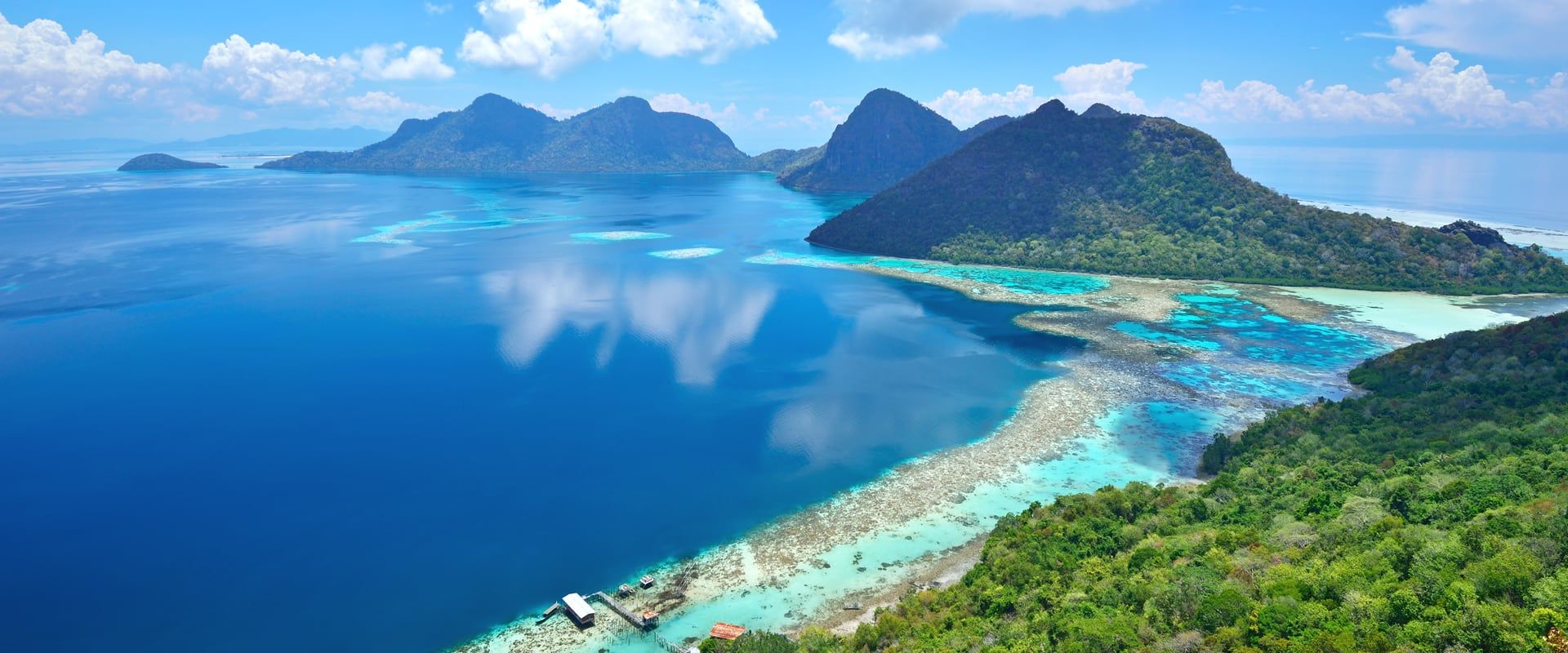
Sipadan is not a piece of Borneo. It is the tip of an extinct volcanic cone rising some 600 metres from the floor of the Celebes Sea, capped over thousands of years by coral growth. That makes it Malaysia’s only oceanic island — the surrounding reef islands, Mabul and Kapalai among them, sit on the continental shelf in shallow water. Sipadan alone drops straight into the abyss a few metres from its beach.
The biology follows the geology: deep nutrient-rich water forced up a vertical wall concentrates life around twelve hectares of land in a way no shelf island can match. Everything that made Sipadan famous starts here.
Borneo Divers, Cousteau, and the boom
Recreational diving at Sipadan was pioneered in the late 1980s by Borneo Divers, who set up the first camp on the island and remain the operator with the longest continuous history here — now based on Mabul at Borneo Divers Mabul Resort.
In 1989 Jacques Cousteau brought the Calypso to Sipadan and filmed Borneo: The Ghost of the Sea Turtle, exploring the turtle cavern and describing the island as an untouched work of art. The film did what Cousteau films did: within a few years, Sipadan was on every serious diver’s list, and a handful of small resorts operated directly on the island through the 1990s — a period divers who were there still describe with something close to grief, because you could step off your chalet and onto the wall.
The International Court of Justice case
Through the 1990s, Sipadan and neighbouring Ligitan were claimed by both Malaysia and Indonesia. Rather than escalate, the two governments jointly submitted the dispute to the International Court of Justice in 1998 — one of the few territorial cases in the region resolved by law rather than force.
The Court ruled on 17 December 2002. Neither side’s treaty arguments settled the matter; the judgment turned on effectivités — the record of actual administration. Britain, and then Malaysia, had regulated turtle-egg collection, established a bird sanctuary and built lighthouses on the islands over decades, with no protest from the Netherlands or Indonesia. By sixteen votes to one, sovereignty went to Malaysia.
The ruling matters for divers in a practical way: it is why Sipadan is administered by Sabah Parks under Malaysian law, and why the permit system exists in the form it does.
April 2000, and what changed after
On 23 April 2000, armed members of the Abu Sayyaf group crossed from the southern Philippines and kidnapped twenty-one people from a resort on Sipadan — tourists and resort staff — taking them by boat to Jolo. All were released over the following months after prolonged negotiations. It remains the defining security event in the island’s history and it belongs in an honest account.
What followed shaped the region’s present. Malaysia hardened maritime security in the area over the next decade, and after the 2013 Lahad Datu incursion established the Eastern Sabah Security Command (ESSCOM) and the Eastern Sabah Security Zone, which covers the whole Semporna archipelago. Today there is a permanent security presence at the resorts, on the boat routes and at Sipadan itself, curfews on night movement at sea, and a Navy base between Semporna and Tawau. Thousands of divers visit every year without incident. The safety guide covers current practicalities.
2005: clearing the island
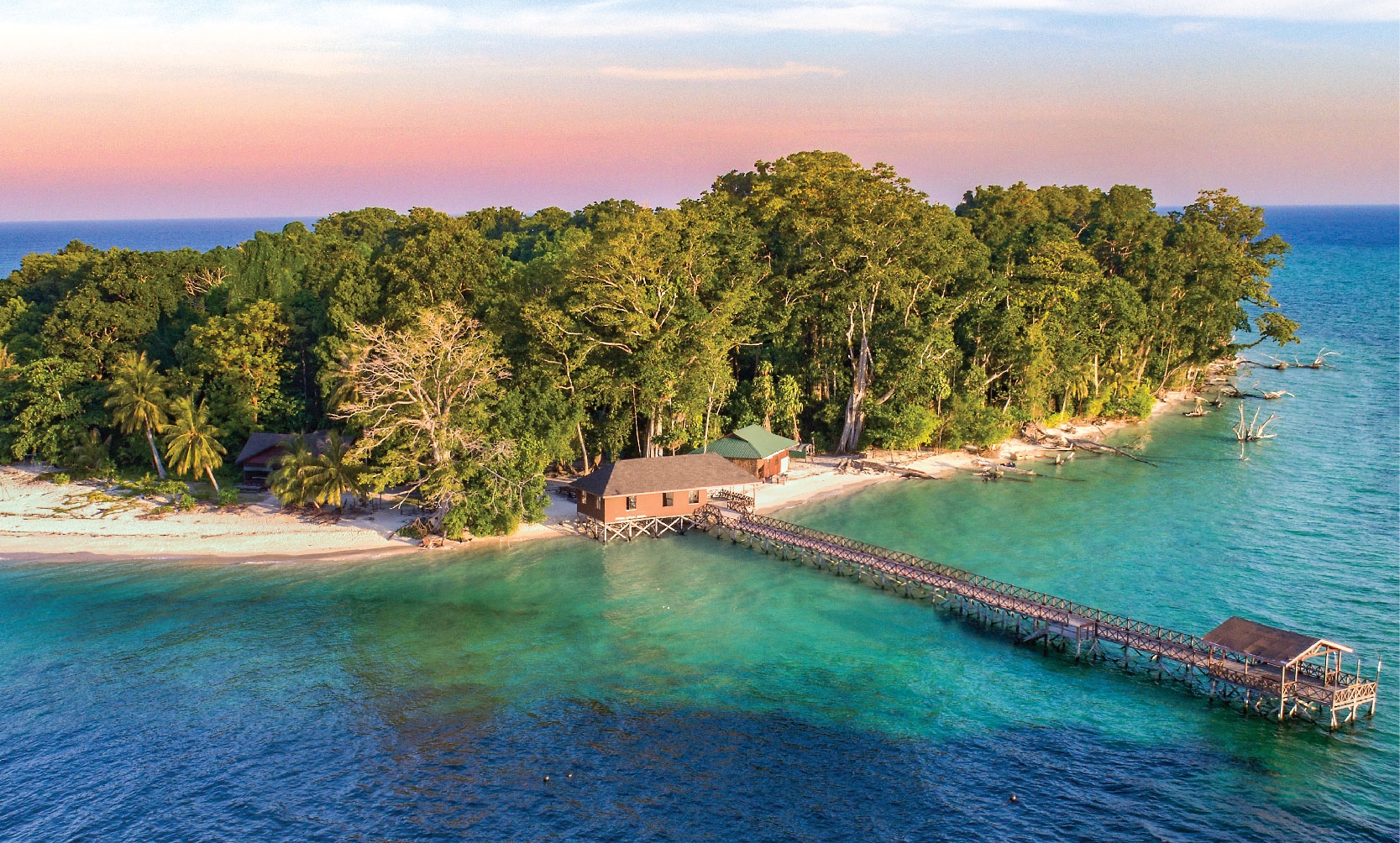
By the early 2000s the resorts were visibly degrading the reef and the island’s turtle-nesting beaches, and the sovereignty ruling gave Malaysia a clear hand to act. The federal government ordered every operator off the island; the resorts closed at the end of 2004 and the structures were removed in 2005. Sipadan became a day-visit-only island under Sabah Parks management.
The daily permit quota followed in 2006, initially 120 divers a day, allocated to the licensed operators who had relocated to Mabul, Kapalai and Semporna. It has been adjusted several times since. The November closure for reef recovery, the Advanced Open Water requirement introduced in October 2022 and the reef-safe sunscreen rule are the same policy continued: the island is managed for the reef first and visitors second.
Divers who knew the 1990s sometimes call this a loss. The reef would disagree. Turtle numbers, coral cover and the schooling fish that make the place famous have all held up under a regime almost nowhere else in Southeast Asia has been willing to impose — which is why Sipadan still looks like Cousteau’s film when so many of its contemporaries no longer do.
For divers, the history reduces to one sentence: everything that makes Sipadan hard to book is the same thing that keeps it worth booking. See current packages.
Dive the island the history protected
Send dates and certification. We check permit days with our operating partner and reply within one working day.
Get dates & price How permits work today